Skip to content

Doctoral Researcher · University of Miami

BishalShrestha

I build AI and deep learning for the three-dimensional architecture of life, from the folding of the genome to single cells and the molecules they build.

The through-line

One method family, three scales.

Graph transformers and geometric deep learning: the same structural way of thinking, from the folding of whole genomes down to the surfaces where proteins meet. Scroll to travel between them.

  • Built with
  • PyTorch Geometric
  • Graph transformers
  • GNN ensembles
  • E(3)-equivariant GATr
  • ConvLSTM autoencoders

Genome

3D chromatin folding

How the two meters of DNA in every cell fold into loops and domains, and what it means when that folding changes across time or disease.

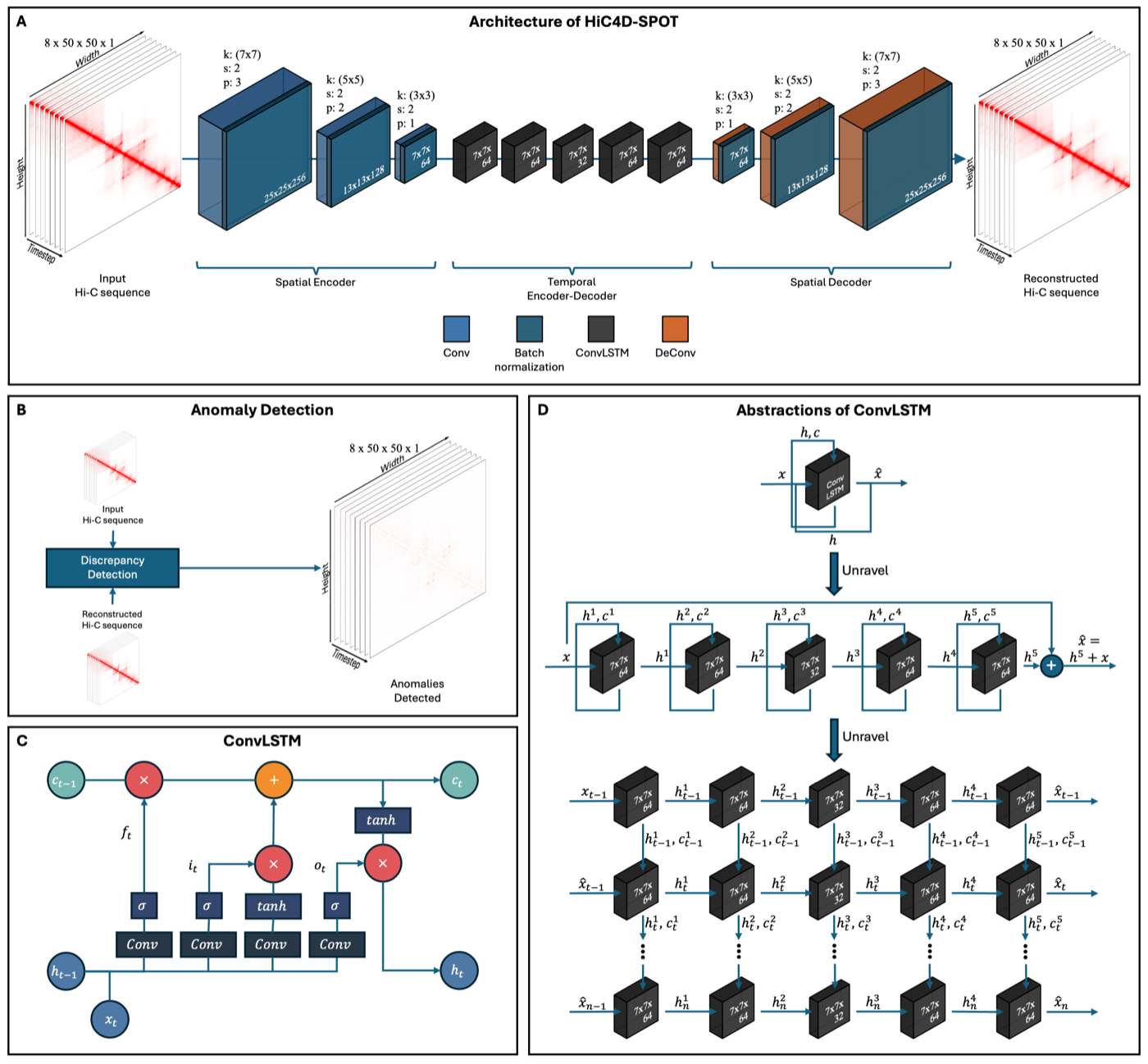
HiC4D-SPOTBriefings in Bioinformatics, 2025

I built it to flag exactly where and when the folding goes wrong across time.

Cell

Single-cell genomics

Reading one cell at a time: linking a single cell's 3D genome structure to the genes it actually switches on.

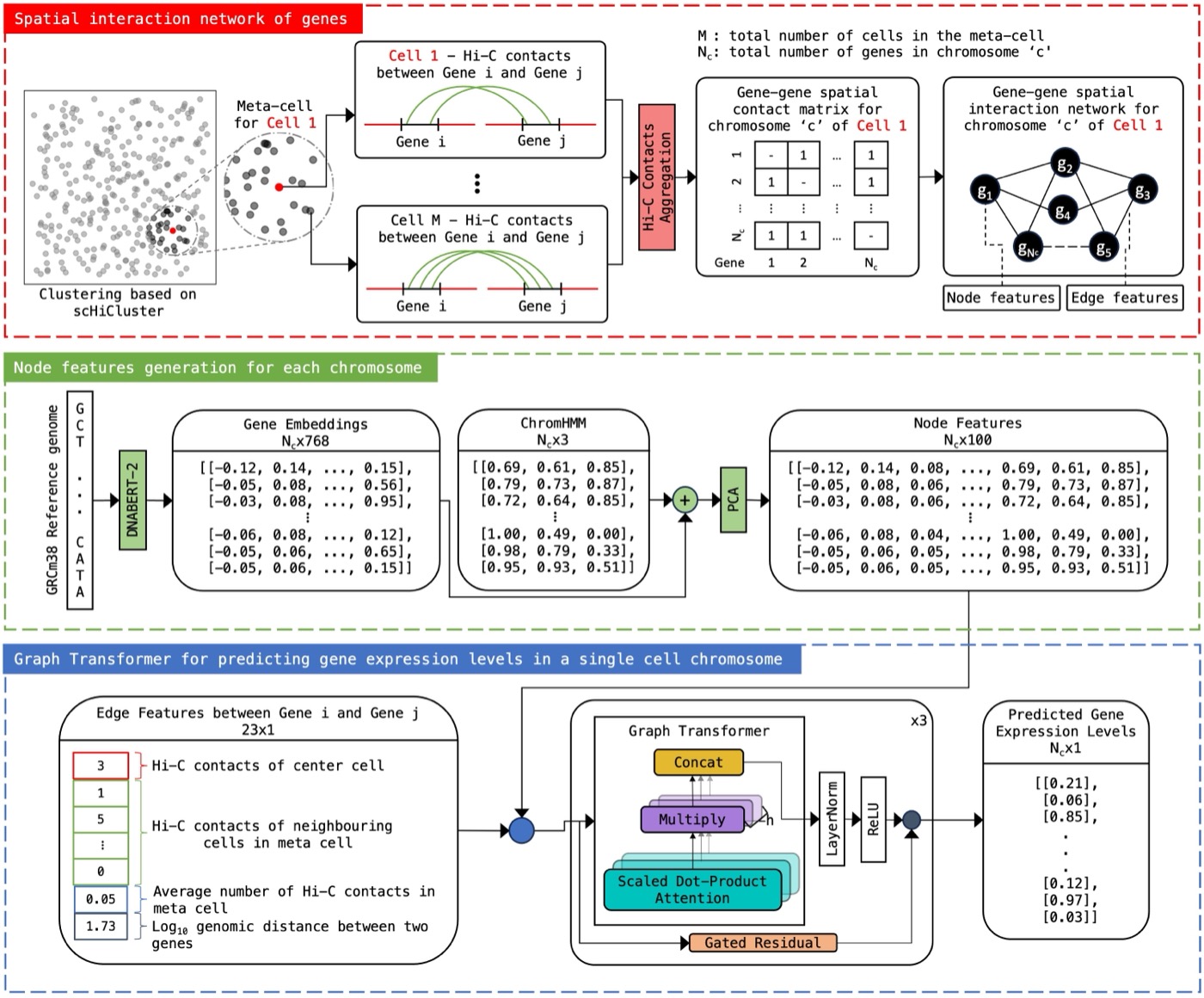
scHiGexNAR Genomics & Bioinformatics, 2025

It reads one cell's 3D genome and predicts the genes that cell switches on.

Molecule

Biomolecular structure

Scoring and understanding the structures of proteins and protein-RNA complexes, the machinery the genome builds.

ARCunder review, PROTEINS · CASP16

It scores how accurate a predicted protein interface really is.

Scroll to travel the scales

Publications

3 first-author flagships
Under review · CASP16PROTEINS (Wiley)

Status & scope

Origin
CASP16
Method
GNN ensemble
Target
Per-residue accuracy
First authorPROTEINS (Wiley), 2026, under review

ARC: Assessment of Interface Residue Conformation using an Ensemble of Graph Neural Networks

Shrestha B, Siciliano AJ, Huang G, Bao Y, Wang Z

An ensemble of graph neural networks that scores how accurate a predicted protein interface really is.

More publications

Bioinformatics, 2026

Inferring the qualities of protein-RNA models with graph transformers

Siciliano AJ, Bao Y, Shrestha B, Wang Z

Extends structure-quality scoring beyond single proteins to protein-RNA complexes, the multi-biomolecule machines cells actually run on.

Graph TransformerProtein-RNAQuality assessment

I build deep-learning models for the 3D genome and biomolecular structure — turning how DNA folds and functions into something a model can learn.

I started in computer engineering in Kathmandu, drawn by a restless curiosity for how things work. That curiosity turned into a commitment to biological discovery through computation — computational biology and bioinformatics: from graph neural networks for genomic data to systems that catch the moment genome structure shifts during development or disease.

I conceived and led HiC4D-SPOT, scHiGex, and ARC as first author, and I work embedded with wet-lab teams: for the CITED2 study in EMBO Molecular Medicine, a druggable-target paper, I ran the computational analysis.
Research program

One way of thinking should read biological structure across every scale. Three claims I am working to prove:

  • 01

    Detect structural failure across the genome's time axis.

    HiC4D-SPOT shows 4D folding drift is detectable without labeled disease states; the same unsupervised idea should generalize across chromatin transitions.

  • 02

    Treat 3D structure as a sufficient statistic for expression.

    scHiGex recovers cell types from single-cell Hi-C alone (ARI 1.00 on HiRES); next is predicting how expression shifts when structure is perturbed.

  • 03

    Score interface accuracy before an experiment confirms it.

    ARC, my CASP16 entry, estimates per-residue quality where proteins meet — and extends to protein-RNA and larger complexes.

Bishal Shrestha
Doctoral Researcher, University of Miami
Field
AI for structural biology and the 3D genome
Advisor
Dr. Zheng Wang, University of Miami
Methods
Graph transformers, GNNs, E(3)-equivariant transformers, ConvLSTM, autoencoders, generative models
Toolkit
Python, PyTorch, PyTorch Geometric, scikit-learn; bioinformatics pipelines

Projects

Beyond research

Research is where my focus sits. These are things I build for the craft of it — when an idea is worth making real.

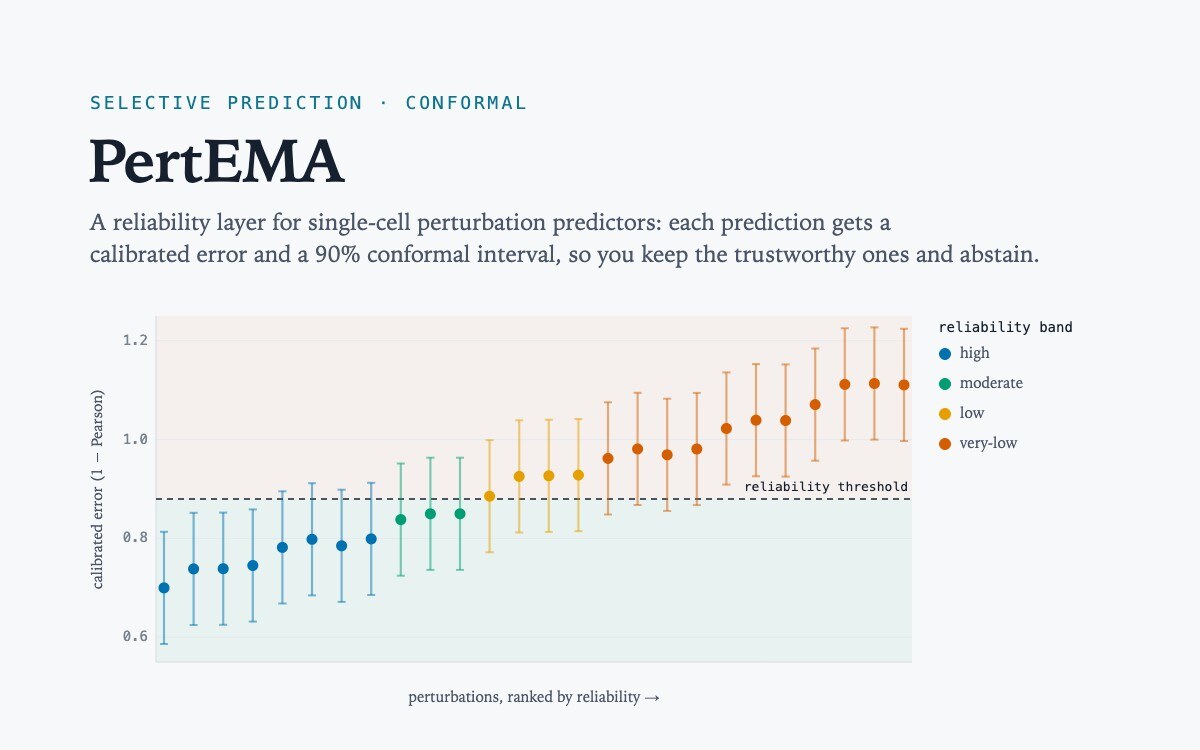
A conformal reliability plot — perturbation predictions ranked by calibrated error, each with its 90% conformal interval, colored by reliability band and split by an accept/abstain threshold
Interactive · Computational Biology2026

PertEMA

A post-hoc reliability layer for single-cell perturbation predictors. Rather than build a better predictor, it scores which individual predictions to trust, giving each a calibrated error and a 90% conformal interval over any model's outputs. The scoring core is ported to JavaScript and runs entirely in the browser, so a lab's predictions never leave their machine.

  • Python
  • XGBoost
  • NumPy
  • Vanilla JS
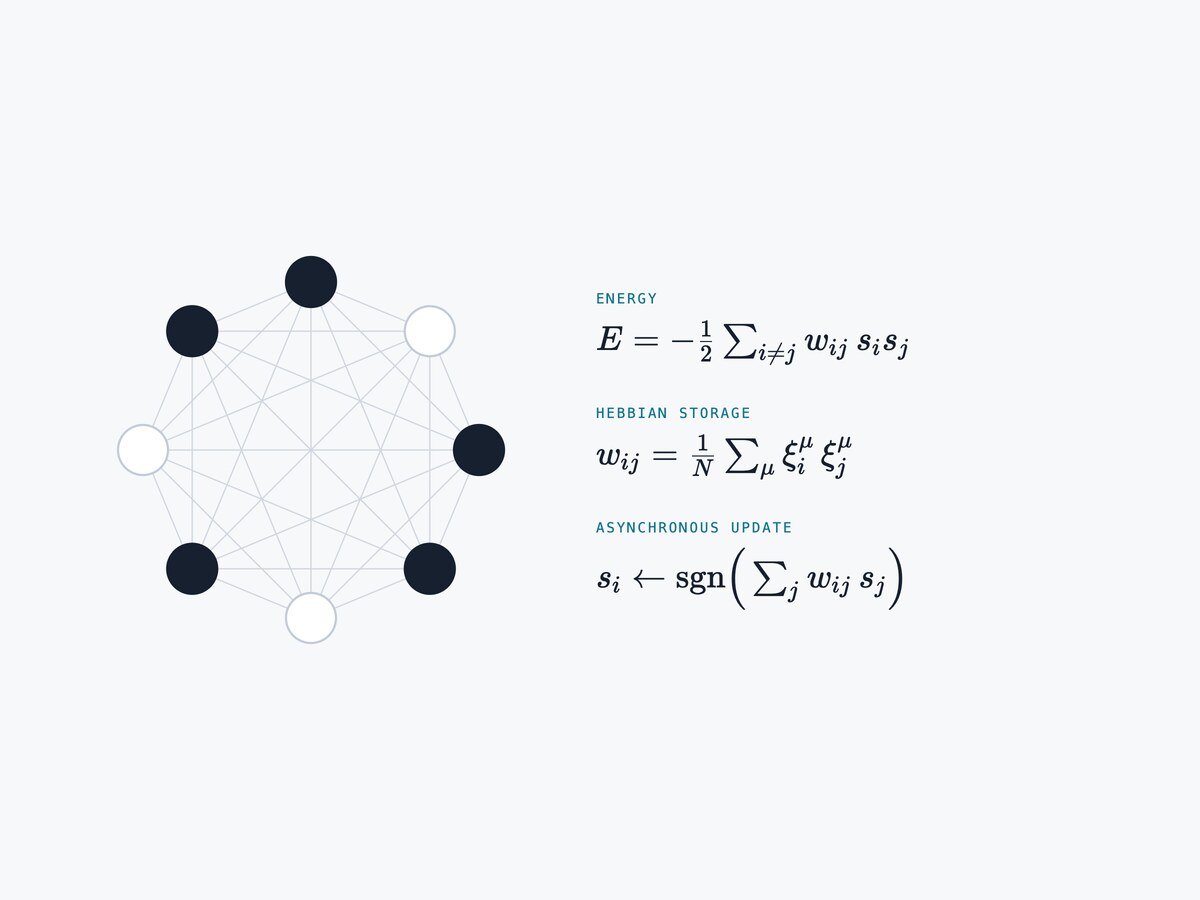
A Hopfield recurrent network diagram — eight fully-connected neurons beside its energy, Hebbian storage, and asynchronous update equations
Interactive · Neuroscience2026

Hopfield Networks

An interactive study of associative memory: store patterns as memories, corrupt them, and watch a Hopfield network recall the original. It walks from the classical 0.138·N capacity wall to the modern continuous model — one-step softmax retrieval that is, exactly, the transformer's attention.

  • Python
  • NumPy
  • Vanilla JS
  • Canvas
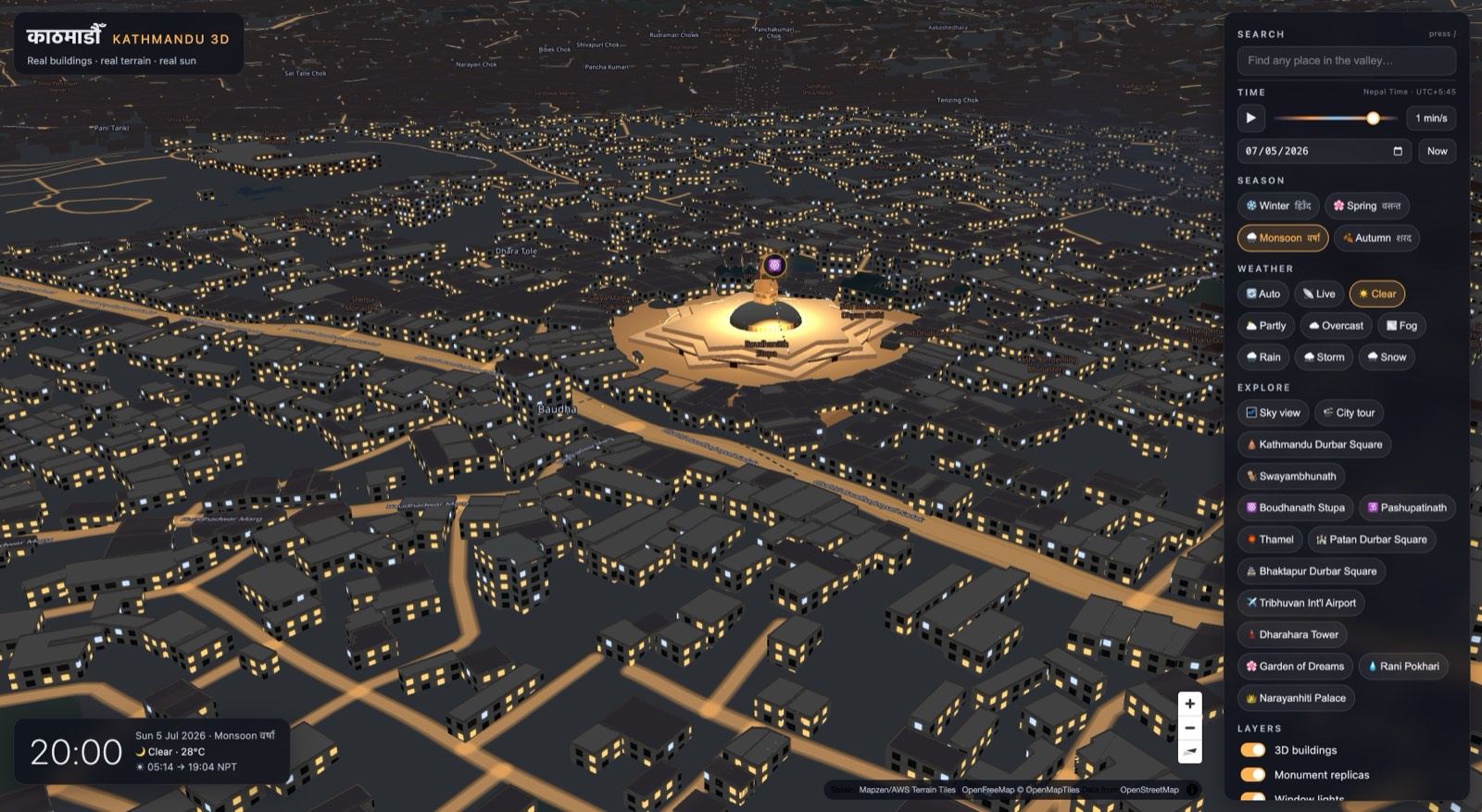
Boudhanath Stupa floodlit at night in the Kathmandu 3D map, with window and street lights glowing across the valley
Interactive 3D2026

Kathmandu 3Dकाठमाडौँ

A living 3D map of the Kathmandu Valley, built from OpenStreetMap geometry and real terrain, with eight monuments procedurally modelled from surveyed dimensions. Time of day, seasons, weather and night are driven by real astronomy (Meeus-style sun and moon) and WMO climate normals; real aircraft stream in over ADS-B.

  • MapLibre GL
  • three.js
  • WebGL
  • OpenStreetMap
  • Astronomy

Teaching

University of Miami, 2023-2026

CSC402

Computer Science Practicum II

Graduate Teaching Assistant, Spring 2025, Spring 2024

4.9 / 5 peak eval
CSC314

Computer Organization and Architecture

Visiting Lecturer, Spring 2025, Fall 2024 (2 sections)

CSC314

Computer Organization and Architecture

Graduate Teaching Assistant, Spring 2026

CSC113 / CSC200

Data Science for the World

Graduate Teaching Assistant, Fall 2023

Recent

Papers, talks, and service

  • Poster

    Poster presentation

    ARC: Assessment of Interface Residue Conformation using an Ensemble of Graph Neural Networks, Computing Day, University of Miami (May 2026).

  • Paper

    Protein-RNA quality assessment paper in Bioinformatics

    Co-authored “Inferring the qualities of protein-RNA models with graph transformers,” extending structure-quality estimation beyond proteins to multi-biomolecule systems.

  • Paper

    SCW published in BMC Bioinformatics

    Co-authored SCW, which reconstructs whole-genome 3D structures from extremely sparse single-cell Hi-C data, benchmarked across multiple cell types.

    Read the paper
  • Preprint

    ARC submitted to PROTEINS for CASP16

    Submitted ARC, an ensemble of graph neural networks for interface-residue conformation assessment, my first-author project from participating in CASP16.

  • Paper

    New paper in EMBO Molecular Medicine on CITED2

    Co-authored work identifying CITED2 as a druggable epigenetic switch that promotes axonal growth and functional recovery via the HDAC inhibitor Panobinostat.

    Read the paper
  • Service

    Reviewer for ISMB 2026

    Serving as a reviewer for ISMB 2026, the flagship conference of the International Society for Computational Biology.

  • Paper

    HiC4D-SPOT published in Briefings in Bioinformatics

    An unsupervised ConvLSTM autoencoder that detects structural anomalies in spatiotemporal 3D chromatin data, TAD disruptions, loop perturbations, and cohesin-mediated remodeling.

    Read the paper
  • Poster

    Poster presentation

    HiC4D-SPOT: a spatiotemporal outlier detection tool for Hi-C data, Computing Day, University of Miami (April 2025).

  • Paper

    First PhD paper: scHiGex on single-cell gene expression

    My first PhD paper, scHiGex, published in NAR Genomics and Bioinformatics, a graph transformer bridging single-cell Hi-C data and gene-expression prediction.

    Read the paper
  • Poster

    Poster presentation

    Predicting single-cell gene expression from single-cell Hi-C using a graph transformer, Computing Day (April 2024) & Sylvester Comprehensive Cancer Center Annual Retreat (Oct 2024).

  • Milestone

    Started my PhD journey

    Began my PhD in Computer Science under Dr. Zheng Wang at the University of Miami, Coral Gables, Florida.

Can one geometric framework predict structure across genome, cell, and molecule?

I’m glad to talk — about research collaborations, a faculty-track opening, or a machine-learning team building in biology. Email reaches me fastest.

Based in
Coral Gables, Florida
Office
310K Ungar Building, 1365 Memorial Drive, Coral Gables, FL 33124